
In-person LLM training September 2026
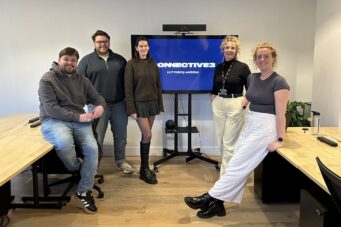
Connective3 has been appointed by Stowe Family Law, the UK’s largest specialist family law firm, to support its Digital PR activity and strengthen the brand’s visibility across an increasingly complex search landscape.
We were selected to develop and deliver high-quality, creative Digital PR campaigns designed to increase Stowe Family Law’s visibility across its key location areas and build brand authority. The work will combine our expertise in Digital PR, creative campaign development and SEO with Stowe Family Law’s specialist knowledge and established reputation within the family law sector. The partnership will also include reactive link building, identifying relevant opportunities to secure high-quality links and brand mentions across the media.
We will also work closely with Stowe Family Law’s internal organic team, helping ensure the brand is discoverable as consumers increasingly turn to AI tools and large language models as part of their search journey.
“Stowe Family Law is an incredibly well-established and respected national law firm, with a strong reputation for expertise, quality and putting clients at the heart of everything it does. From our very first meeting, it was clear that we share a real ambition for growth, innovation and creativity. We’re delighted to be partnering with the team across digital PR and are excited by the opportunity to build on Stowe’s existing reputation, increase its visibility and strengthen its position as a leading voice within the family law space. With our proven track record in creating campaigns that earn attention, build authority and drive brand visibility, combined with Stowe’s expertise and ambition, we’re confident this will be a hugely impactful partnership.”
“AI is an increasingly important part of our organic strategy, We’re excited to see how this DPR campaign can support our long-term commercial objectives by strengthening our visibility across organic channels – particularly as more people use LLMs to discover services like ours.”
Our agency continues its strong growth trajectory, recently expanding our client portfolio across retail, hospitality, and ecommerce. With over 140 headcount across Leeds, London, and Manchester, alongside integrated creative partner Powerhouse, we continue to strengthen our position as one of the UK’s leading performance marketing agencies.
Want to know more?
Today, we’re announcing the promotion of David White to CEO, following his previous role as Chief Growth Officer (CGO).
The role will see David, who is also a founder of the agency, take over from current CEO, Tim Grice, as Tim moves into the position of Group CEO following the recent growth investment from leading regional private equity and real assets investment manager Foresight Group.
As we enter our seventh year of trading, the leadership transition will see David continue to drive the agency’s growth strategy, leading our teams across Leeds, Manchester and London while supporting the business’s wider ambitions around AI technology, international expansion and strategic growth.
Tim will transition into the role of Group CEO, where he will focus on the Group’s wider growth strategy and strategic acquisitions.
“I’m incredibly honoured to be taking on the role of CEO at Connective3 and to have the opportunity to lead the agency through its next phase of growth.
“Having been part of Connective3 since day one, I’m immensely proud of what we’ve built, the team we’ve created and the work we deliver for our clients. With the recent investment from Foresight Group, we have an exciting opportunity to accelerate our ambitions, continue investing in our people and technology, expand internationally and build on everything we’ve achieved over the past seven years.
“I’m looking forward to working alongside Tim and the wider leadership team as we enter this next chapter and continue our ambition to build the world’s leading demand and performance marketing group.”
“David has been instrumental in building Connective3 from day one. As one of our original management team, he has helped shape our culture, our proposition and our growth, making him the natural person to lead the agency into its next chapter. He knows our business, our people and our clients inside out.
As Group CEO, my focus is on accelerating growth across the wider group through acquisitions, AI, international expansion and bringing great businesses together. David and I will continue to work closely to ensure Connective3 and the wider group grow with the same ambition, culture and client-first approach that has defined us from the beginning.”
Since launching in 2019, we have experienced significant growth and now employ more than 140 people across our offices.
Today, we partner with leading brands across a diverse range of sectors and markets, delivering work throughout the UK, US, Canada, Australia and mainland Europe. Our client portfolio includes major national and international brands such as HSBC Private Banking, Ocado, Adobe, SumUp and Wren Kitchens.
Want to know more?
Demand + Performance marketing group Connective3 has secured growth investment from leading regional private equity and real assets investment manager Foresight Group (“Foresight”) to accelerate its next phase of growth, investing further in proprietary AI technology, international expansion and strategic acquisitions.
Founded by Tim Grice, Connective3 has grown into one of the UK’s fastest-growing independent marketing groups, employing more than 140 specialists across Leeds, Manchester and London, and partnering with leading brands including HSBC, Adobe and Wren Kitchens.
Connective3 believes the future of marketing belongs to organisations that unite demand generation and performance through AI, replacing disconnected channels with one intelligent growth system. The investment will accelerate that vision, combining brand building, demand generation and performance marketing into a single connected approach that delivers measurable commercial growth.
At the heart of that vision is C3X, Connective3’s proprietary AI platform, which connects data, insight and activation across every marketing channel. By combining human expertise with intelligent technology, C3X enables businesses to make faster, smarter marketing decisions, uncover new opportunities for growth and measure commercial impact with greater confidence.
Backed by Foresight, Connective3 will continue investing in C3X, expand internationally and accelerate its acquisition strategy, building a global marketing group designed for the AI era. Working in partnership with the management team, Foresight will provide strategic support and access to its wider network to help the business execute its growth strategy and capitalise on the opportunities created by AI.
“Marketing is changing faster than ever. The traditional divide between demand generation and performance marketing is disappearing, and AI is creating an opportunity to connect every part of the customer journey like never before. Our ambition is to build the world’s leading Demand + Performance marketing group, combining exceptional talent with proprietary technology to help ambitious businesses grow faster. Foresight shares that vision, and together we’re excited about what comes next.”
“This investment marks the next chapter for Connective3. What Tim and the team have built — a genuinely connected approach to demand and performance, underpinned by proprietary AI — is rare in this market. Backed by Foresight, we now have the platform and the capital to take that globally.”
“Connective3 is exactly the type of business we look to back at Foresight – a high-quality business led by an ambitious management team, with a strong track record and clear opportunities for growth. The team has developed a differentiated proposition that combines marketing expertise with proprietary technology, and we look forward to supporting the business as it continues to scale through investment in AI, international expansion and strategic acquisitions.”
Foresight is one of the UK and Ireland’s leading investor into growing companies. With more than a dozen offices around the UK and Ireland, its investment teams back promising, growing companies, providing equity or debt to meet the needs of founders and management teams wherever they are on their journey.
By working collaboratively, Foresight provides much more than investment, sharing operational insights, guidance and helping management teams make strategic connections. We are passionate about enabling founders and management teams to build resilient and prosperous companies that have a positive impact on their local communities.
Want to know more?
Last Tuesday, we hosted our first Digital Bites event of 2026 at one of our favourite venues, the Everyman Cinema in Manchester. A huge thank you to all our attendees and speakers for joining us and making it a memorable day. Since launching Digital Bites in 2021, we’ve loved bringing marketers from the North together for afternoons filled with actionable strategies, expert insights, and networking – we’re looking forward to bringing it back later this year!
This particular event felt like one of those sessions where everything clicks into place. Not because there was a single big theme, but because every talk, in its own way, pointed to the same underlying shift in marketing right now. Things are getting harder to track, harder to measure and harder to predict, but the opportunity to stand out has never been clearer.
Dan opened the event by bringing the conversation back to something simple but often overlooked. As more brands gain access to the same tools, platforms and data, the gap between them isn’t getting smaller because of capability, it’s getting smaller because everyone is following the same playbook.
What still sets brands apart is creativity. Not just in big campaign moments, but in how they show up consistently. It’s one of the few areas that can’t be easily replicated or automated, which is exactly why it matters more now than ever.
View Dan’s slides here
Charlotte’s talk shed light on a huge challenge for today’s marketers: navigating a world of diminishing data. Signals are disappearing, people are harder to identify, and at the same time expectations around personalisation haven’t dropped.
A big part of the shift is also on the consumer side. People are more aware of their data and more in control of it, which makes staying addressable more difficult, but also more important. The brands that adapt are the ones that stop relying on a single source of truth and start thinking more flexibly about how they can build a full picture of their audience.
View Charlotte’s slides here
Keira’s session was a reminder of how easy it is to overcomplicate personal branding. The biggest barrier for most of us isn’t a lack of knowledge or a missing niche, it’s the pressure to be an expert on day one. The takeaway was less about tactics and more about mindset. You don’t need to have it all figured out to start, you just need to start.
View Keira’s slides here
Lizzie unpacked how much search has changed, even in the past twelve months. While traditional search still dominates, it’s no longer the only place for brand discovery and consumer decision-making.
Customer journeys are more fragmented than ever, with users moving across platforms, formats and touchpoints long before converting. That means showing up in one place isn’t enough anymore. Visibility needs to stretch across the entire ecosystem, including the moments that influence and assist a conversion, not just the ones that claim credit for it.
The takeaway: SEO isn’t just a Google tactic anymore, it’s everywhere.
View Lizzie’s slides here
Nick’s talk focused on the growing measurement gap, and more specifically, the difficulty of isolating the metrics that truly matter.
As brand and performance continue to overlap, it’s harder to separate what’s driving results. Standard platform reporting only tells part of the story, which is why incrementality testing is becoming essential. Understanding what activity genuinely drove additional value versus what was going to happen regardless of the spend is where the real insight sits.
View Nick’s slides here
Alicia highlighted a disconnect that a lot of marketers overlook. While many believe their activity plays a big role in influencing buyers, most consumers feel like they’re making those decisions on their own.
That gap changes how we should approach things like email and messaging. It’s not about sending more, it’s about being more relevant. Personalisation and segmentation play a big role here, particularly when it comes to understanding the difference between engaged and unengaged audiences.
Ronja’s talk centred on the growing impact of AI in PR and the challenges that come with it. With more AI-generated content being produced than ever before, the space is becoming increasingly crowded.
However, it isn’t just about the volume, it’s the lack of distinction. When everything is designed to sound right, very little stands out. This is where the human touch wins. Emotion, originality and lived perspective are harder to replicate, and they’re exactly what create your competitive advantage.
Her takeaway was simple but powerful: In a world of AI content, being human is your edge.
View Ronja’s slides here
Heather introduced Pinterest Predicts and how it can be used to understand emerging trends before they fully take off.
What makes this tool so valuable is that it tracks future intent; what people are planning to do, not just what they’ve already done. That gives brands a clearer view of where culture is heading. The real value lies in the transition from insight to action – using these pioneer trends to guide everything from creative campaigns to core product development.
The takeaway was clear: Spotting the trend is the baseline, but knowing how to pivot your strategy to meet it is the real win.
View Heather’s slides here


That’s all from us! We’ll be back with another Digital Bites later this year, so we hope to see you there for more actionable insights. In the meantime, check out the full photo album here and make sure you’re following us on social to kept in the loop with our latest updates!
Let’s get started
Each year we select two winners from C3 who get to travel to a charitable project of their choice anywhere in the world, to offer their support and give back to a worthy cause.
Below is a recap from our Middleweight Creative, Lucy Selley, who travelled to the US to volunteer for the Ukrainian National Women’s League of America.
Volunteering for the Ukrainian National Women’s League of America (UNWLA) was an experience I’ll never forget. As a Ukrainian with family living in occupied territory, being able to contribute in some way meant everything to me.
My family are from Crimea, Ukraine, where they still live, but since Russia’s illegal annexation of Crimea in 2014, they haven’t been able to leave, and I haven’t been able to visit. Over the years, the region has faced severe repression of Crimean Tatars, restrictions on free speech, ongoing human rights abuses, and damage to the economy, environment, and cultural heritage. Not being able to return or see my family for the past ten years has been difficult, so I stay connected to my culture through language lessons, Ukrainian events in the UK, cooking, and Ukrainian media. Volunteering with UNWLA in the U.S. felt like a meaningful way to continue that connection and contribute to a cause I care so much about.

I spent the first week in New York helping with preparations for UNWLA’s Centennial Celebration at the historic Bohemian National Hall. The organisation was marking 100 years of Ukrainian women’s leadership, service, and cultural preservation. I helped set up the venue, arranging decorations, posters, and banners, and on the day of the event I welcomed guests and handed out programs outlining the schedule (practicing my Ukrainian along the way.) One of the most special moments was hearing a message from President Volodymyr Zelenskyy, recognising UNWLA’s century of courage and solidarity, and the impact it has had on Ukrainian communities worldwide.
The highlight of the celebration was “A Legacy in Motion”, a theatrical production following the journeys of generations of Ukrainian women, from the organisation’s founding to its ongoing humanitarian work today. The day ended with a reception featuring drinks and delicious food from Veselka, a restaurant that has long been a beloved part of New York’s Ukrainian community for generations. I had the chance to meet people from across the U.S. and hear their stories, leaving me feeling connected, and proud to be part of such a strong community.

The second week took me to Washington, D.C., for the Ukraine Action Summit, where over 700 advocates from all 50 U.S. states came together to meet with Congress and push for continued support for Ukraine. The five day event included panel discussions, musical performances, film screenings, and advocacy training, all leading up to meetings on Capitol Hill. The discussions focused on the return of abducted Ukrainian children, stronger sanctions against Russia, and long-term security guarantees.

During the summit, I helped with a variety of tasks including designing banners, managing slides for speakers, preparing folders and name tags for delegates, and checking people in each day, all while meeting many passionate people who dedicate so much of their time and energy to helping Ukraine. The closing event at Ukraine House was especially powerful. We heard from veterans and parents who had lost children serving in the war, hearing stories of unimaginable loss and courage. In true Ukrainian fashion to end the day, we shared a meal of traditional dishes including borsch, varenyky, deruny, and medovik. This brought comfort and a sense of togetherness despite the sadness and was a powerful reminder of both the human cost of the war and the resilience and solidarity that continue to unite Ukrainians around the world.

These two weeks were unforgettable. I met so many incredible Ukrainians, by blood and by heart, all full of love for Ukraine. I practiced my Ukrainian language, made connections, and felt even closer to my family’s heritage. Being part of these events reminded me that even far from home, there are ways to stand up for your roots, and that the passion, courage, and unity of the Ukrainian community can inspire hope and strength, no matter where you are.
Our team have taken part in a range of volunteering over the years from supporting women’s development and education in Nepal to cleaning beaches in Puerto Rico, we’re proud that C3 staff members are making a difference all over the world.
Find out more about our volunteering programme here and if this sounds like something you’d like to take part in, head over to our careers page.


The afternoon brought together a brilliant mix of 8×8-minute talks from brands including Hip Pop, Cox Automotive, Connective3, GIFTA and more. Topics ranged from influencer gifting and data, to brand building, personal development, and unsurprisingly, AI.
We have been running Digital Bites for the past five years and we’re incredibly proud of where it is today. The event has grown in size and scale but what remains the same is our commitment to bringing a fun, friendly and informative event to the Manchester marketing community.
Digital Bites continues to sell out each time, with a growing waitlist of marketers hoping to grab a spot. This is a testament to the hard work our team put into delivering the event, the short and snappy content our speakers deliver and the thriving digital scene here in Manchester.
A huge thank you to our event sponsor, GIFTA, to our brilliant speakers, and to everyone who joined us on the day. Digital Bites wouldn’t be what it is without your support.
You can view the event photography here.
Catch up on each session below, including talk summaries and speaker slides.
This talk by Connective3’s Rosa and Elle explored how AI is reshaping the search landscape and why we need to look beyond traditional metrics like clicks. They explained that AI Overviews and LLM-driven results now appear in around 13% of global searches – mainly informational, but we’re seeing an increase in also commercial and even transactional searches. While these results often don’t drive clicks, Rosa and Elle explained that if users are still getting their answers from your content, the click-through doesn’t matter. They highlighted the rise of hyper-personalised AI search modes which pull in everything from search history to calendar data, and noted that LLM usage is growing fast, signalling a long-term shift in how people search. For now, the fundamentals remain the same: create high-quality and regularly updated content, anticipate follow-up questions, use rich media, maintain strong technical foundations and schema markup, and build brand authority.
Next up was Kirsty Perkins from Dale Carnegie who delivered an interactive session that had the whole room up on their feet. The premise of the talk was that delegates were given eight prompts to discuss with someone they had never met before in the room, and each prompt had to be discussed with a new person. The prompts got the audience discussing why it’s important to:
– Skip the blame game
– Remember names
– Ask good questions
– Give real recognition and more
Tom Higgins from GIFTA took us through the evolving world of influencer gifting, emphasising that while AI has its place, it is people and their honest reaction that truly shape a brand’s credibility. He explained the importance of treating influencers as consumers first and not just content creation machines and accepting that not everyone will love your product and that’s ok. His recommended approach was simple, if the influencers your gifting products to love it then they should feel free to post about it and if they don’t, the brand should want to hear why. Tom highlighted that viral moments can’t be engineered by brands but they happen when creators are trusted to tell the story in their own way. He also underlined the need to track all content in real time to feed insights back to stakeholders and noted that as the influencer landscape evolves rapidly, brands should be leveraging creators of all sizes to ensure their marketing remains effective.
Eve Rodway, Brand Manager at Hip Pop, delivered the next session on how challenger-brand thinking can help any business cut through an increasingly noisy online world. She explained that consumers don’t always want polished perfection but instead they want to feel something and this is what gives challenger brands the freedom to take risks, use their personality and show up as real humans. Eve shared fun, low-budget and experimental examples from Hip Pop, from a Mr T–inspired outfit to a pumpkin drink stunt. Her core message was that the work that feels spontaneous and a bit experimental sticks ten times longer than the work that feels safe. In a digital landscape that can feel increasingly fake, she encouraged brands to embrace realness, lean into their quirks and create moments that genuinely resonate.
Connective3’s very own, Brittany Deller, took to the stage next to deliver a clever, dating-themed session exploring why marketers focus too much on the “first date” — the click — and not enough on what happens next. She reminded the audience that clicks aren’t commitment, and vanity metrics don’t tell the full story, especially when the ad is brilliant but the website experience falls flat. Instead of ignoring the users who ghost, Brit explained that we should be looking at why they drop off. She explained that your insights are key to effective marketing as they act as the matchmaker that connects your channel. By leaning into first-party data and understanding how users behave on your website and across your campaigns, we can build experiences that attract customers and more importantly keep them around.
Jim Ker opened with a relatable confession that: “AI is doing my head in” – capturing the pressure many marketers feel as the landscape shifts faster than anyone can track. With stakeholders asking for proof of how teams are adapting, Jim shared the areas that he’s focused on. First up is reporting which he stated is still the way to a stakeholder’s heart, but AI has changed things. Impressions are rising, clicks are falling, and marketers need to explain why the quality of traffic now matters more than the volume. He urged the industry to diagnose problems before prescribing solutions and to evolve traditional skillsets to include AI search and prompting, and find trustworthy sources amidst the noise. SEO, he joked, has “died” seven times – “she’s not dead, she’s having a glow-up.” His closing message was simple: value your copywriters, embrace frameworks like RISE, and don’t be scared of AI – “just get on the damn bus.”
C3’s Will Brittain and Tash Carlisle delivered a practical session on how to stop wasting brand budgets and build campaigns that genuinely earn attention. They stated that brand campaigns are long-term by nature, making them harder to justify to stakeholders, especially when quarterly reports demand immediate results and true uplift often only appears when ads with strong creative are seen at higher frequencies. They walked through measurement approaches like GEO-testing and creative analytics, stressing that creativity is what gives media its impact. Their creative motive framework helps brands identify audience motivators and barriers and translate these into emotionally resonant creative that clearly communicates benefits. Using examples from clients (including how different emotional drivers can reshape positioning), they showed how great storytelling and influencer content can bring these motivations to life authentically. Their takeaway was simple: if you want brand media to work, you need emotionally grounded ideas, clear measurement baked in from the start and creative that resonates far beyond narrow, transactional messaging.
Jennifer Livesey from Bizzy Humans closed the day with a fast, funny and brilliantly relatable session on why so many of us feel busy but not productive and why the problem isn’t us, it’s the systems we work in. Drawing on her experience managing mission-critical projects, she explained the three forces that silently sabotage our workdays: ourselves (overthinking, multitasking and people-pleasing), each other (constant pings, group chats and chaotic collaboration) and our systems (messy processes and unclear expectations). Jen showed how small fixes like reducing low-value tasks, setting boundaries, simplifying workflows and ditching or muting group chats can unlock huge gains in calm and clarity. Her biggest takeaway was for the audience to start noticing friction, write it down, and commit to fixing one thing each week. By engineering chaos out of your workday, you free up the time, focus and energy to actually thrive.


Check out all the event photos here and make sure you’re following us on social to kept in the loop with our latest updates!
Let’s get started
Apple’s iOS 26 are reshaping how digital campaigns are tracked and measured. These shifts are driven by stronger privacy protections, smarter analytics, and evolving user behaviour, especially on mobile.
Here’s what’s changing, how it impacts your advertising, and what you should be doing to stay ahead.
The biggest headline from the iOS 26 announcement is around privacy updates. Apple may now strip tracking identifiers such as gclid (Google Click ID) and fbclid (Facebook Click ID) from Safari, Mail, and Messages which could mean a large portion of campaign data that marketers previously relied on is no longer being passed back to advertising platforms
On top of that, App Tracking Transparency (ATT) continues to require users to actively opt in to tracking which most users choose not to, further limiting the available data to advertisers.
SKAdNetwork 5.0 is now the default framework for app install attribution and while it is more accurate than earlier versions, it still only offers aggregated insights rather than the detailed, user-level view that many marketers are used to.
These changes don’t mean the end of campaign measurement (Apple has said so themselves historically, they don’t want to break the internet) but they do mean marketers need to adapt quickly. With less reliance on third-party identifiers and user-level tracking, success will come from strengthening your measurement foundations, leaning into privacy-first practices, and making better use of the tools that still work. Here are our five steps to stay ahead:
With the latest iOS update, Apple are still fully supporting UTMs, making them one of the most reliable ways to measure campaign performance in GA4. It is important to make sure every link is tagged with parameters such as utm_source, utm_medium, utm_campaign and by standardising your UTM structure across all channels (email, social, paid media, influencer campaigns) this will give you cleaner and more consistent reporting.
First-party data is now the most reliable and you can collect it directly through your site or app using clear, consent-driven forms. It is important to focus on valuable identifiers such as email addresses, phone numbers, and in-app behaviours. Once captured, this data can be fed into ad platforms like Meta, Google, and TikTok to build stronger audience targeting.
GA4 should be seen as your central hub for campaign measurement. You should ensure you key conversion events are setup and tracked correctly – whether that’s purchases, sign-ups, or app installs. GA4’s Data-Driven Attribution (DDA) model will do the rest to get a more accurate picture of the customer journey across multiple touch points.
Tracking only works if users opt in, especially on iOS. To increase your consent rates, ensure that your opt-in flows are transparent, value-driven and easy to understand, and experiment with different messaging over time to see what users respond to best.
As browser-based tracking becomes increasingly restricted, server-side tagging offers a more resilient solution. By sending events directly from your server to GA4 and ad platforms, you reduce reliance on cookies and client-side scripts while improving data accuracy. You can look into using tools like Google Tag Manager’s server-side setup to future-proof your tracking infrastructure.
Overall, this isn’t something to panic about, keep an eye out on your metrics, and as long as you or your data solutions team is abiding by best practices, you’ll remain ahead of the curve.
When retail giant Amazon stepped out of the Google Shopping auction in late July 2025, it was a huge moment that had the whole industry talking. The immediate question on every marketer’s lips was: “What happens to my Cost Per Click (CPC) now?”
The easy answer is to look at a ‘before and after’ snapshot. But easy answers are often wrong. To get to the truth, we used a Causal Impact analysis to scientifically measure the real-world effect of Amazon’s exit on CPCs across key retail verticals. The results were not what you might expect.
This report will take you through our study, explaining why we chose Causal Impact analysis, the results for each vertical, why it’s important to understand consumer intent, the actual CPC shifts we saw and ultimately why Amazon could afford to walk away from Google Shopping.
Note that as of 25th August Amazon are back in Google shopping auctions showing this was indeed a true holdout test to measure incremental value Google Shopping is providing to the revenue uplifts for Amazon.
A Period-on-Period (PoP) comparison only looks at how metrics move between two timeframes (e.g., before vs. after Amazon’s exit). While useful, it assumes that any change is directly caused by the event, ignoring seasonality, broader market shifts, or randomness.
Causal Impact, on the other hand, uses a Bayesian structural time-series model to estimate what would have happened if the event (Amazon’s exit) hadn’t occurred. This gives:
A Clear Narrative: It quantifies the average and cumulative effect over time, showing whether the impact was a short-term blip or a long-term shift.
For example, a simple PoP comparison showed CPCs in the Gifts category fell by 3.3%. A tempting conclusion would be that Amazon’s exit reduced competition. However, our Causal Impact analysis revealed the confidence interval overlapped with zero, proving the effect was not statistically significant. We avoided a misleading conclusion that a lesser analysis would have produced.

Pink is Causal Impact and Grey is PoP.
So, what actually happened when Amazon left the auction? The big surprise is that the impact was highly concentrated. We didn’t see a widespread surge in CPCs. Instead, we saw one clear winner, one category with a significant drop, and a whole lot of stability elsewhere.
The chart below shows the statistically significant impact, or lack thereof across key industries.

📈 The major outlier: Laptops (+21.9%)
The only category to see a statistically significant and substantial CPC increase was Laptops. The story here is a perfect storm of timing and technology. Amazon’s exit coincided with the back-to-school season, a peak demand window for everything from headphones and tablets to monitors and speakers.
As students and parents began their shopping, conversion intent surged. Google’s Smart Bidding algorithms, which are designed to maximise outcomes, recognised this high probability of conversion and bid aggressively to capture those valuable clicks, pushing CPCs up. This proves a critical point: modern auctions are driven by conversion probability, not just competitor volume.
📉 The big decline: Protein Supplements (-10.5%)
At the other end of the spectrum, Protein Supplements saw the only statistically significant decrease in CPCs. This reflects a different, but equally important function of Smart Bidding: efficiency. This period often coincides with a post-payday lull in spending for this category. The algorithm likely identified lower conversion intent and reallocated budget away from less valuable clicks, causing the average CPC to drop as it optimised for efficiency.
Everything in between: Statistical stability
For every other category we analysed – including Consumer Electronics, Mattresses, Garden & DIY, and Gifts, the impact was not statistically significant. As you can see on the chart, the error bars for these verticals all cross the 0% line. Any minor CPC fluctuations observed were simply statistical noise, not a direct result of Amazon’s departure. This is a crucial distinction that only a Causal Impact analysis can provide.
The impact of Amazon’s absence is less about auction mechanics and more about the consumer’s path to purchase. For many products, shoppers simply don’t default to Amazon, which fundamentally changes how the market reacts.
If you’re still managing your paid search accounts with CPC as your primary KPI, you’re looking in the rearview mirror. With the dominance of Smart Bidding strategies like Target ROAS and Max Conversions, CPC has become a byproduct, not a goal.
Here’s why:
This explains our findings perfectly. CPCs for Laptops rose because Smart Bidding chased high-value, back-to-school conversions. CPCs for Protein Supplements fell because algorithms likely reallocated budget away from lower-intent clicks that are more common as consumers move away from a payday spending spike.
In today’s landscape, CPC is no longer the metric to optimise for. The true measure of success is efficiency, tracked through metrics like ROAS and cost per acquisition.
Finally, let’s consider Amazon’s perspective. For them, leaving Google Shopping isn’t the risk it would be for a smaller retailer. Why? Because consumer behaviour is already hardwired in their favour.
Studies consistently show that the majority of product searches begin on Amazon, not Google. This means Amazon isn’t just a player in the market; for many, it is the market. By pulling out of Google Shopping, they weren’t risking invisibility. They were running a massive-scale experiment to answer a simple question: “Does paying for Google Shopping ads provide incremental value, or would these customers have found their way to us anyway?”
As mentioned, as of 25th August they are back in Google shopping auctions, showing this was indeed a true holdout test to measure incremental value Google Shopping is providing to the revenue uplifts for Amazon.
Their brand gravity and established customer habits mean they can capture demand with or without being in every auction. For them, it is a calculated test of channel value, and for the rest of us, it was a masterclass in the new dynamics of paid search.
This analysis utilised a combination of proprietary in-platform data from Google Ads and publicly available data from Google Trends to construct and validate the Causal Impact model.

Subhash is a paid media specialist with over two years’ experience working across a diverse range of clients and industries in both e-commerce and lead generation. With a strong focus on data, measurement, and optimisation, he has delivered campaigns across PPC and paid social, always aiming to drive incremental improvement and measurable growth. In addition to his broad client exposure, Subhash has developed a practical, problem-solving approach that helps brands address media challenges with clarity and purpose.
Advertising Manager – Connective3
After months of planning, curating an agenda with 32 incredible speakers, partnering with 9 brilliant sponsors, and selling out for the third year running with 400 attendees, we couldn’t be prouder of what we brought to Manchester.
When we first launched Up North in 2023, it was important to us that we created something a little bit different. That’s why our focus has always been on the speakers, the agenda and our amazing venue!
A huge thank you to our sponsors Print.com, Ahrefs, Generation Digital, You Platforms, Passata, Girls in Marketing, Pedagogue, Powerhouse, GIFTA and of course to all our attendees and speakers for joining us.
You can view the event photography here – photo cred to Rebekah Middleton and C3’s Ryan Colleran.
Catch up on each session below with talk summaries and access to speaker slides.
Broghan Smith spoke about his work at the UK’s fastest growing e-commerce platform. With roughly half of the UK population actively using TikTok, and with the typical user spending two hours on the app every day, TikTok Shop has innovated on digital sales with an approach Smith calls “discovery commerce”. This means that creators can speak about a product authentically, show the user a real life application, and present a fully integrated customer journey that all takes place through one app in about 30 seconds. He also discussed TikTok’s rising prominence as a search engine, and the importance of connecting with customers who could wind up becoming your business’ next brand advocate or content creator.
Social media manager Naomi Horan’s fireside chat with C3’s Molly Bartram focused on the importance of community in influencer marketing, and how harbouring an authentic partnership with your creators makes your content feel less transactional and more tailored to your audience. Forming a two-way collaborative process with influencers to create content that their viewers want to see allows for natural marketing, as opposed to campaigns where a creator’s audience has little crossover with a brand’s target demographic. As social media marketing shifts away from mainstay campaign frameworks like the “influencer trip” towards more innovative community events and brand collaborations, long term community-building is becoming the foundation of sustained success. By using your available metrics to see how much your audience values your content, you can inform your brand’s decisions and experiment with new content to avoid stagnation.

Tom Higgins and Natasha Greenwood sat down with Molly Bartram to discuss changes in social media marketing, where more authentic, relatable content is now taking priority over mid-tier macro campaigns with contracted partners. Audiences can sense when a partnership is purely transactional, so trust needs to be built in the influencer space with creators who have a genuine appreciation for a company’s products. They discussed the importance of data collection and collaboration in tailoring campaigns to specific audiences to achieve the best possible results, and how putting products in the hands of smaller creators can create a word-of-mouth buzz rather than manufactured interests from larger accounts.
Our keynote speaker for the day was Stef Sword-Williams, a brand consultant and author of “F*ck Being Humble: Why Self Promotion Isn’t A Dirty Word”. She encouraged the audience to stand up and promote themselves, not through arrogance or ego, but an understanding that their voice is powerful and valued more than we may think.
Her talk discussed how marketing has become homogenised and dull, refusing to address important issues such as women’s safety, workplace equality, affordable mental health counselling, and more through two key ideas: creativity and courage.
By standing out and using your influence to leave a legacy that you can be proud of, you can be indispensable in the workplace and avoid losing your spot to AI or another marketer. She encouraged listeners to ditch their FOSS (Fear Of Sounding Stupid), and replace it with FOBG (Fear Of Being Generic), and to continue their passions separately from their line of work even if an idea is rejected by higher-ups.

Martha Evans and Shannon Royal shared how deep audience engagement can outweigh subject‑matter expertise. Tasked with running social strategy for the Sidemen’s 90‑thousand‑seat YouTube Charity Football Match, they openly “didn’t know the offside rule,” yet turned that outsider status into an advantage. Their core goal was conversation, not just reach: include everyone, spark story‑driven chatter, and be first to surface the moments fans would clip and remix. Rejecting rigid content calendars, they ideate on the fly, tailoring tone and format for each segment of their 16‑25 demographic and transforming trends, like the Grammy “sign‑the‑camera” trend on TikTok, into unique “Sidemen hero moments”.
The pair stressed that originality beats tick-boxing, as well as posting with purpose, evolving trends rather than copy‑and‑paste, and crafting narratives that fans can own. Knowing your audience “better than yourself,” they argued, lets you market an event (even a football match) without needing to be a complete expert in the particular field. Their takeaway: embrace creative intuition, stay agile, and always prioritise what will get people talking.
Nicola Gunby shared her journey from having no prior tech or business background to building a thriving app centred around real-life community connections. Initially launching with just a few features, she emphasised the value of starting small and learning through mistakes, never repeating the same one twice. She detailed how CLIQ filled a market gap by creating a unified platform for people seeking to meet others offline, particularly professionals. Long before “community” became a buzzword, CLIQ focused on cultivating authentic networks, often led by community organisers who now function like micro-influencers.

George Rawlings shared how he and his co-founder disrupted the dating app space by building a brand that thrives on bold ideas and rule-breaking marketing. With no technical background, their journey started with a culture-first mindset – spotting that Thursdays saw a spike in dating activity due to after-work drinks. From there, they built a brand rooted in spontaneity and story, evolving Thursday from an app into a movement that hosts real-life dating events.
George discussed early marketing missteps (like a failed “hump day” LinkedIn stunt) and how those lessons shaped their sharper brand storytelling. Whether over a pint or during a brainstorm, they ideate with narrative in mind, using real user success stories to shape authentic campaigns. Brand partnerships have played a big role too, he offered insights into catching a brand’s attention by being unexpected and culturally relevant.
Mercy Fulani tackled the all-too-familiar feeling of content falling flat after launch, and what to do next. She highlighted how easy it is to banish underperforming work to the abyss, but stressed that quality content deserves a second chance. Backed by the stat that 60% of marketers see better results from repurposed content, she shared a personal story: a lifestyle video she made for a client that initially pulled in just 1,670 views. By updating the caption, thumbnail, hashtags, and keywords and digging deeper into her audience, she eventually pushed the video past 21,000 views.
She emphasised the importance of reviewing analytics (like drop-off points), trying different platforms (e.g. using Reels for travel content), and switching up formats (video vs. stills).
Fiona Robinson and Cadie Mayor explored how blending print and digital (what they called phygital) can create more impactful campaigns. While often seen as old-fashioned, print remains one of the most trusted media formats, with 71% of people completely trusting the mail they receive. They argued that print’s credibility, permanence, and personal feel make it a powerful brand tool, whether it’s a flyer, tote bag or even a water bottle.
Using examples like Toolstation (which used printed QR codes on tools to drive digital traffic, boosting website visits by 10% and saving £1 million) and Coca-Cola (which turned personalised packaging into real-world event experiences), they demonstrated how physical media can reinforce digital efforts. Scientific studies back this up, with multi-sensory experiences, like Royal Mail’s chocolate letter campaign, known to activate more areas of the brain, making the brand more memorable.
Download Fiona and Cadie’s slides here
Tom Baker discussed the evolving European marketplace landscape and how brands can strategically expand internationally. Amazon dominates across Europe (especially in Germany, France, and Spain) while TikTok Shop, despite only launching in the UK in 2023, is growing at an unprecedented pace, achieving in a few years what took Amazon over a decade.
For brands looking to scale across borders, marketplaces offer a faster, lower-cost, and lower-risk route compared to launching a standalone website, though they come with trade-offs. Marketplaces provide a ready-made audience but limit marketing control, while your own site gives you customer data and multichannel potential but requires significant infrastructure and payment setup.

Ben Martin explored the growing use of generative AI in marketing visuals, with 89% of marketers now using AI tools and 62% employing them specifically to create imagery. However, consumer trust hasn’t kept pace as 56% believe brands rely too heavily on AI, risking their credibility.
Ben warned that while AI offers speed and savings, it’s not yet visually accurate or trustworthy enough to replace human input. He showed real-world examples of AI visual failures, stressing that brand trust is hard-won and easily lost.
Highlighting ethical and effective AI use, he shared a campaign from Powerhouse for Avon, where real foreground images were combined with AI-generated backgrounds using virtual production. This saved time and costs while preserving authenticity, showing how AI can enhance, not replace, real photography. They even layered in AI-driven motion, sound, and calls to action without compromising brand integrity.
Sophie Smith shared how cultural relevance (and a little Taylor Swift magic) helped her drive $200k in revenue through clever copywriting and timing. With six years of experience under her belt, Sophie broke down how she capitalised on the Eras Tour’s cultural wave to position Nasty Gal as the go-to brand for concert looks.
The results were a 68% revenue spike, more than 7,000 daily organic visitors, and top rankings for over 300 search terms. But she didn’t stop there. Weekly content updates and fast reactions to product changes (like out-of-stock items) ensured ongoing relevance.
Sophie’s key takeaway was “When Taylor Swift gives you an inch, run a mile.” Staying culturally aware, nimble, and SEO-savvy is what keeps
Karl Randay shared how friction mapping can uncover hidden opportunities in the customer journey fast. Using a detailed case study with Volkswagen, Karl explained how his team mapped the end-to-end experience of vehicle finance, from research to end-of-contract, to identify and prioritise pain points for innovation.
The goal was to uncover quick wins and drive a long-term cultural shift within the organisation toward customer-centric thinking. Their work resulted in a “North Star” strategy grounded in real customer insight, helping Volkswagen align internally and take action more confidently.
Karl walked through the friction mapping process, stressing it’s not rocket science, it’s about talking to people and understanding their lived experience. Though the pandemic made in-home visits difficult, the team scaled up remote studies to avoid bias and maintain integrity.
Alicia Torres encouraged marketers to stop treating email like an afterthought and start thinking about it the same way they do social media. She argued that email isn’t a static channel, it’s a visual, interactive space that should compete for attention just like any social feed.
Alicia reminded the audience that consumers scroll the equivalent of the Statue of Liberty’s height each day, so email has to work harder to grab attention. Instead of viewing social and email as separate or competing platforms, she advocated for treating them as a power duo, with learnings from one informing the other.

Tom Lanaway explored how AI has moved beyond hype to become a powerful “magic” that helps people do more with less effort. Drawing on lessons from building Merlin, Connective3’s internal AI, he shared practical advice on spotting real AI opportunities, persuading stakeholders to invest, and creating AI solutions that empower teams rather than replace them. His talk emphasised turning AI into a dynamic teammate and encouraged attendees to integrate it into their daily work.
Kate Manton explored how true disruption today comes from a powerful combination of AI, self-leadership and teamwork. With AI now an essential, unbiased team member, the talk emphasised embracing it as a collaborator that drives better performance and decision-making rather than a competitor. Yet, by challenging conventional thinking and reimagining team dynamics, listeners were inspired to harness the synergy between human creativity and AI, unlocking new levels of innovation and impact in today’s fast-evolving marketing landscape.
Andreas Stefanou explored how brands can unlock YouTube’s full potential by combining creative excellence with the power of Google AI. He demonstrated how AI-driven tools help deliver full-funnel strategies, from awareness to conversion, by optimising creative, media, and measurement in one seamless ecosystem.
With short-form video on the rise and YouTube Shorts growing rapidly across screens, Andreas highlighted that today’s users are engaging with content in more ways than ever, making it vital for brands to meet them where they are. He also introduced the ABCD framework (Attention, Branding, Connection, Direction) for building standout creative, and shared how partnerships with creators can boost conversions and trust.

In an era dominated by AI, ROAS metrics, and zero-click searches, Claire’s talk highlighted why building a strong brand remains your ultimate unfair advantage. Moving beyond last-click attribution, it focused on strategies to unlock sustainable, long-term growth by creating memorable brands that resonate with audiences, without compromising on immediate performance. The audience learned how to balance brand-building with data-driven results, ensuring their marketing efforts drive both recognition and real business impact.
In this panel, Holly Watson and Adam MacDonald explored how entertainment and culture intersect in a fast-moving digital world. Though their roles differ, they both face the challenge of cutting through noise to reach passionate, media-savvy audiences. They discussed how they prepare for high-profile events, collaborate with talent, and use storytelling to create standout moments.
The conversation touched on adapting to a mobile-first audience, the shifting definition of success in social media, and what the future holds for live entertainment and digital content, with both Holly and Adam spotlighting the rise of immersive experiences and new formats as key trends.
In a fireside chat with C3’s Rosa Mitchell, Perla Bloom unpacked what modern communications really demands: audience-first thinking, space for innovation, and a bold embrace of entertainment-led storytelling. She shared how the strongest campaigns begin with a clear strategy rooted in audience insight – not just understanding who people are, but what they care about and how they connect with culture.
Perla emphasised the importance of creating room for experimentation within budgets and team culture, encouraging brands to treat failure as a pathway to innovation. As more brands shift toward storytelling that feels like entertainment, she highlighted that this isn’t just a trend, it’s how culture moves, and brands that adapt will build deeper, longer-lasting connections.
Gus Pelogia delivered a session on the importance of crafting an SEO roadmap that actually drives business impact not just busywork. His central message was cut through the noise and focus on what really moves the needle.
Too often, SEO teams get distracted by shiny tasks that don’t tie to real KPIs. Instead, Gus urges SEOs to zoom out: think in terms of projects, not tasks, and build a roadmap around big themes with measurable outcomes. Each initiative should be backed by a clear business case, helping you stay focused, justify priorities, and say no to one-off distractions that won’t scale.
Gus also emphasised the value of split testing and measuring causal impact, especially on large websites. For example, what seems like a minor menu redesign could actually be a month-long, cross-functional effort involving UX, SEO, product, sales, and leadership. Without a roadmap and business case in place, you risk losing alignment and momentum.

Dan Morehead explored how SEO and PPC can be perfectly aligned not competing, but complementing each other. Using the backdrop of the ever-evolving TV streaming landscape, including ITV Hub’s rebrand to ITVX and Channel 4’s own platform overhaul, the talk highlighted how search strategy must adapt with brand evolution.
Channel 4’s recent rebrand unified its streaming service under one name but legacy search behaviours persist. Many users still search using terms like 4oD or even Channel 4 iPlayer. Analysis showed that 80% of brand impressions still come from these outdated but familiar search queries. The takeaway from this insight was that if you’re not ranking organically for these terms, you’re missing out regardless of your current branding.
Dan also advises to use a VPN to emulate different locations and AI search behaviours, a smart move when reporting on SERPs visibility and testing search variations in new environments.
Elle focused on the shifting landscape of search and what it means for modern SEO. Her session centred on four key areas: AI Overviews (AIOs), video and social search, organic shopping, and Google’s AI Mode offering a look at how SERPs are transforming and what strategists need to do now.
The rise of AI Overviews (AIOs) is changing how users interact with Google and 14% of keywords now return AIO features, jumping to 88% for long-tail keywords. They’re especially prevalent in industries like life sciences, tech, biology, and finance, and month-on-month growth is accelerating fast.
However, AIOs are fuelling zero-click searches meaning your brand needs to be visible inside those results or risk getting cut out entirely.
With social platforms now being as legitimate as search engines, Elle emphasised mapping video formats, scripting effectively, and tightly aligning with keyword research. Tools like KeywordTool.io and Ahrefs can be used side-by-side for deeper insights.
As ChatGPT and Google start making AI-powered product recommendations, it’s essential your product pages and feeds are fully optimised. This includes high-quality images, clear titles, competitive pricing and structured data.
With Google AI Mode (currently rolling out in the US), the search landscape is becoming hyper-personalised but Elle reassured the room that while this feels overwhelming, it’s also a major opportunity for agile brands.
All in all, Elle’s talk focused on the key takeaway of not losing sight of humans. As AI transforms the SERP, the brands that win will be the ones creating content for people not just algorithms. Strong EEAT signals (expertise, author bios, trust indicators) still matter more than ever.
Gaby and Olivia shared their journey from meeting in 2020 to building thriving, community-led brands. Girls in Marketing (GIM), now a global learning platform and movement, has grown to 20 million social media impressions, partnering with over 60 global and local companies. Gaby also built Talk Twenties from a podcast into a large-scale platform reaching millions.
Their core message of their talk: community isn’t just an add-on, it’s the foundation. Whether it’s the inside jokes or the vulnerable spaces they’ve created, both founders stressed that community means belonging, safety, and shared identity. Community, they argued, is your most powerful marketing strategy, with 64% of consumers wanting brands to connect with them beyond product.
They outlined three key points:
Download Gaby and Olivia’s slides here

Helen explored how belief, energy, and vision drive brand success just as much as strategy. Using the Stanley Cup trend as an example, she showed that cult brands like Amazon and Lululemon don’t just sell products, they sell belief.
Sharing her personal journey from a struggling shop owner to life-changing success through visualisation, Helen emphasised that belief fuels action, and action builds momentum.
Helen’s magnetic marketing framework follows three steps:
This panel explored what personal branding really means, how it impacts professional growth, and how to build an authentic presence that resonates with the right audience.
Ash Jones emphasised that personal branding should reflect who you are offline, not just your online persona. Micro shifts in language can change who you’re speaking to, so clarity matters. Relevance is more important than reach and going viral only works if there’s meaning behind it. He encourages playing the long game and using AI wisely as building your brand yourself has long-term value.
Clair Heaviside described personal branding as more than ego, it’s how people perceive your purpose. She encouraged treating yourself like a brand: define your values, goals, and what makes you different. Content should offer value and reflect who you are beyond your job title. Use AI as a tool, not a crutch, refinement is key to keeping content meaningful.
Rosa Mitchell spoke openly about imposter syndrome and the importance of self-belief. With over a decade in marketing, she shared that building confidence in your voice takes practice. She recommends keeping evidence of your expertise to remind yourself you’re capable, as personal branding starts with backing yourself.


Check out all the event photos here and make sure you’re following us on social to kept in the loop with our latest updates!
Up North is being hosted at Victoria Warehouse, Manchester – full details on how to get to us can be found here.
If you’re travelling by tram, the nearest stops are Exchange Quay and Wharfside, both just a short walk from the venue.
Still a bit stuck on how to get there? Check out this video showcasing the route to take from Manchester Piccadilly train station.
Yes there is free parking at the venue, there are 100 spaces and it’s first come first served. If you have accessibility requirements please email [email protected]. We encourage the use of public transport where possible!
We’ve got an agenda JAM PACKED with great talks, panels, fireside chats, and more. You’ll be hearing from F*ck Being Humble, Expedia, Sidemen Entertainment, Co-Op Live, Google, TikTok and more. You can view the full speaker line-up here and full talk overviews and check out the agenda here.
We’ll have morning pastries and tea & coffee provided by Ahrefs, giving you that all-important brain power for the day ahead! There will be delicious lunch options available to purchase from Victoria Warehouse.
Alongside our amazing agenda of talks, there will be lots of networking opportunities throughout the day and you can chat to our sponsors who are exhibiting. There’ll be merch, give-aways, prizes, cookies and stroopwafels from print.com, Powerhouse, GIFTA, Generation Digital , You Platforms, Passata, Girls in Marketing and Pedagogue.
There’ll be post-event networking drinks from 5-7pm sponsored by Print.com.
There will of course be free wifi on the day. The password for this is Connective3. However with 400 people trying to access the network, it may be a little slower than expected at times, so please bear with us.
Not sure what to expect? Check out the behind-the-scenes vlog from Up North 2023:
Last and most importantly, the when – join us on Thursday 19th June at Victoria Warehouse, doors open at 8.30am with talks kicking off at 9.30am. With delicious lunch onsite, networking, and an after-party, we’d love to host you right up until the conference closes at 7pm.
We’ll see you there!
For any additional information, please check out our FAQs.


