


EventsReports
BrightonSEO April 2026: the Connective3 Roundup
C3 hit BrightonSEO this April to talk shop and soak in the latest search expertise. From the evolving foundations of search to our own Britt Deller’s standout session on data measurement, this blog covers the key takeaways you need to know from the world’s largest SEO conference.
Overview
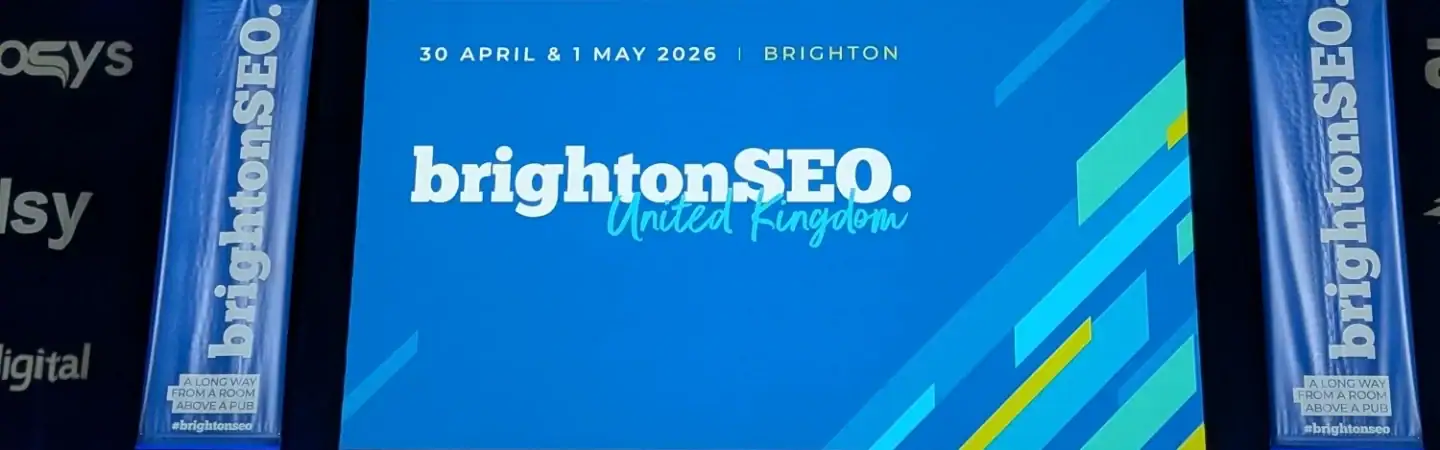
BrightonSEO returned this April and C3 was back at our trusty stand to soak in the sun, sea and, of course, unmatched SEO expertise. Search enthusiasts from around the globe came together to pack out the Brighton Centre and share in the buzz – and, of course, pick up plenty of swag.
Shoutout to Britt Deller, who took to the Skyline Stage on the Thursday with an enlightening talk on how to stop screaming into the void and make data measurement impossible to ignore – a critical conversation to help marketers ensure they get heard in team meetings as much as in the boardroom when they discuss data measurement. Look out for the recap video if you missed it!
As we took in the sessions, workshops, and conference centre chat, one theme underpinned almost every conversation and it’s nothing new to devout marketers: the foundations of search are evolving faster than ever. Here are some of the key takeaways from this edition of the world’s largest search marketing conference.

C3 talk
“How to make measurement impossible to ignore” by Brittany Deller
Be honest… how often have you screamed into the void, “This is really important!” to a team or client?
Our Senior Marketing Analytics Manager, Brittany Deller, took the stage at BSEO to tackle this exact struggle head-on. She explored why working in measurement can feel like swimming upstream, from patching up avoidable tracking errors to the uphill battle of proving your value without the time to lay the proper groundwork.
In her talk, Brit dove into these common friction points. She shared how to speak a language everyone understands, how to pitch that game-changing feature, and how to demonstrate the true value of your team’s work.
AI, GEO and LLMEO?
Every corner of this year’s conference seemed to echo the same message; AI is here, and it’s reshaping SEO at lightning speed. Any strategy – tech SEO, content or paid – that doesn’t acknowledge and work alongside them is missing out on a huge chunk of search potential.
AI-assisted search and workflows have become industry staples on a rapid time scale and our experience working across various sectors and verticals reinforces the key points speakers were making; it’s no longer about if AI will impact your business, but how it’s already impacting your business and what you can do about it.
While AI visibility might sometimes feel chaotic or random, the various tools, platforms and insights on offer throughout the conference proved that it is measurable, and the right strategy can be really successful.
Jon Earnshaw from Pi Datametrics made some great points on how brands can survive being interpreted by agentic search by focusing on conversations rather than prompts, and testing their websites to see if they hold enough scrapable information to hold a meaningful conversation with AI or LLM systems. In practical terms, this means creating content that is not just accessible and optimised for humans but also for AI bots crawling your site, structured in a way that enables effective extraction and summarisation.
Everyone has their own take on the role of AI in the marketing world (and their own acronym to go with it!) but the fact is that near-universal adoption of tools, platforms and search functions has made it vital for any business or agency to get with the programme or get left behind.
Talk to C3 about GEO and AIO SEO, or read our guide on generative engine optimisation 101.
SERPs aren’t simple anymore
Search results pages are no longer linear lists of links. Between paid ad placements, AIOs, and integrated social and forum content, understanding and optimising for the SERP has never been trickier and several talks explored what this new reality looks like and how we can be working with it rather than against it.
Tom Capper from STAT and Moz used a particularly interesting example; by analysing pixel height on SERP results, he demonstrated how easily even the #1 organic ranking can appear below the fold, something we have seen increasingly on both desktop and mobile search as Google diversifies the SERPs. This reality underscores a critical point: maximising SERP real estate and looking beyond rankings as a key metric is vital.
This intersected nicely with the talk given by Janaina Barreto-Romero from Oncrawl, who suggested that comparing clicks to revenue can provide a useful wider picture of brand success – with volatility or drops in many of the usual metrics, comparing these factors against revenue can help you see what impact they are having on the brand’s bottom line.
Read our article on why marketing data is getting harder to trust for more insights.
Trust is everything
EEAT is evolving, and search engines are getting better at rewarding content that demonstrates verifiable credibility and reliability.
When users are bombarded with AI slop at every turn, brands need to demonstrate extensive trustworthiness to find a valid place at the table. In her talk, Amanda Walls from Cedarwood Digital shared her thoughts on EEAT2.0, going beyond traditional trust signals to include things like off-site brand reputation, and how online sentiment towards and discussion of brands can have a massive impact on how it’s perceived and surfaced in both traditional and AI search.
Meanwhile, Haider Ali talked about the search everywhere and how siloed working across departments could be stifling discoverability – your content, SEO, PR and social media teams need to work together to align their goals and build that overarching trust in your brand.
TL;DR – here’s what you need to know
In a hurry? Here’s a quick rundown of some of the key points raised through the BrightonSEO talks this time:
- AI is everywhere – make sure you’re incorporating it into every stage of your search strategy and experimenting to find the best strategy for your business.
- Unique content wins – churning out the same answers as all of your competitors isn’t likely to drive as much success as a fresh, unique look at the topic.
- Work collaboratively across departments – interdepartmental alignment is vital to create a cohesive strategy and ensure all areas are optimised for search behaviours.
- Don’t overlook social content – a conjoined strategy between SEO and social search can increase your visibility in-platform and on traditional search.
- Build trust with your audience – trust and community are the two main factors that will bring people into and back to your business, time after time.
Want to learn more?
If you’re looking to learn more about how search is evolving, take a look at our detailed whitepaper on the state of search in 2026, or get in touch to see how Connective3 can support your brand. Otherwise, we’ll see you back in Brighton in October!
Meet the author

Rebekah has over four years of content experience across a wide range of industries, from lifestyle to legal and beyond. Whether it’s powerfully persuasive on-page copy for an eCommerce business, an eye-opening blog post to draw in customer engagement or a press release to shout about the latest innovation, Rebekah loves getting the right words to the right audience at the right time.
Rebekah Crinean
Content Strategist, Connective3
Let’s get started
Social search is no longer optional
One of the key highlights from this year’s conference was that social search is simply no longer optional for businesses – once a nice-to-have, those who aren’t leveraging social platforms as a core part of their search strategy are liable to leave significant reach, visibility and conversion potential on the table.
Platforms like YouTube, TikTok, and Reddit have become search engines in their own right and with Google pulling them through into the SERPs, on-site content is frequently not enough on its own to meet users where they’re at.
Thomas Peham and Rick Tousseyn from Otterly AI ran through the results of their own GEO experimentation, which called out Reddit and YouTube as the two most-cited social platforms in AIs and LLMs, particularly AIOs and AI Mode (although, oddly, not Gemini), and highlighted the importance of incorporating optimised videos into your content strategy.
This means adopting a cross-platform search strategy: creating content that can be indexed and surfaced on multiple platforms, optimising video content to ensure maximum visibility in both native platform search and traditional SERPs, and embedding video content within written content to create a symbiotic relationship.